REACT COMMANDOPERATIONAL /FUSED FEEDS : CAD·VMS·RADIO·SENSOR /AI TRANSCRIPTION : 45+ LANGUAGES LIVE /SMART ALERTS : WEAPONS·VIOLENCE·MEDICAL·FIRE /ROLE CONSOLES : OPERATOR·FIRE·POLICE·EMS /GPT-4 NARRATIVE + SCENE ANALYSIS /REAL-TIME GPS UNIT TRACKING /WEBRTC + PSTN VOICE /LIVE TRANSLATION : 40+ LANGUAGES /SUPERVISOR WHISPER MODE /AI DISPATCH RECOMMENDATIONS /AUTOMATED QA SCORING : A–F /DUPLICATE DETECTION + INCIDENT LINKING /60+ REST ENDPOINTS · SOCKET.IO LIVE /UPTIME TARGET 99.99%
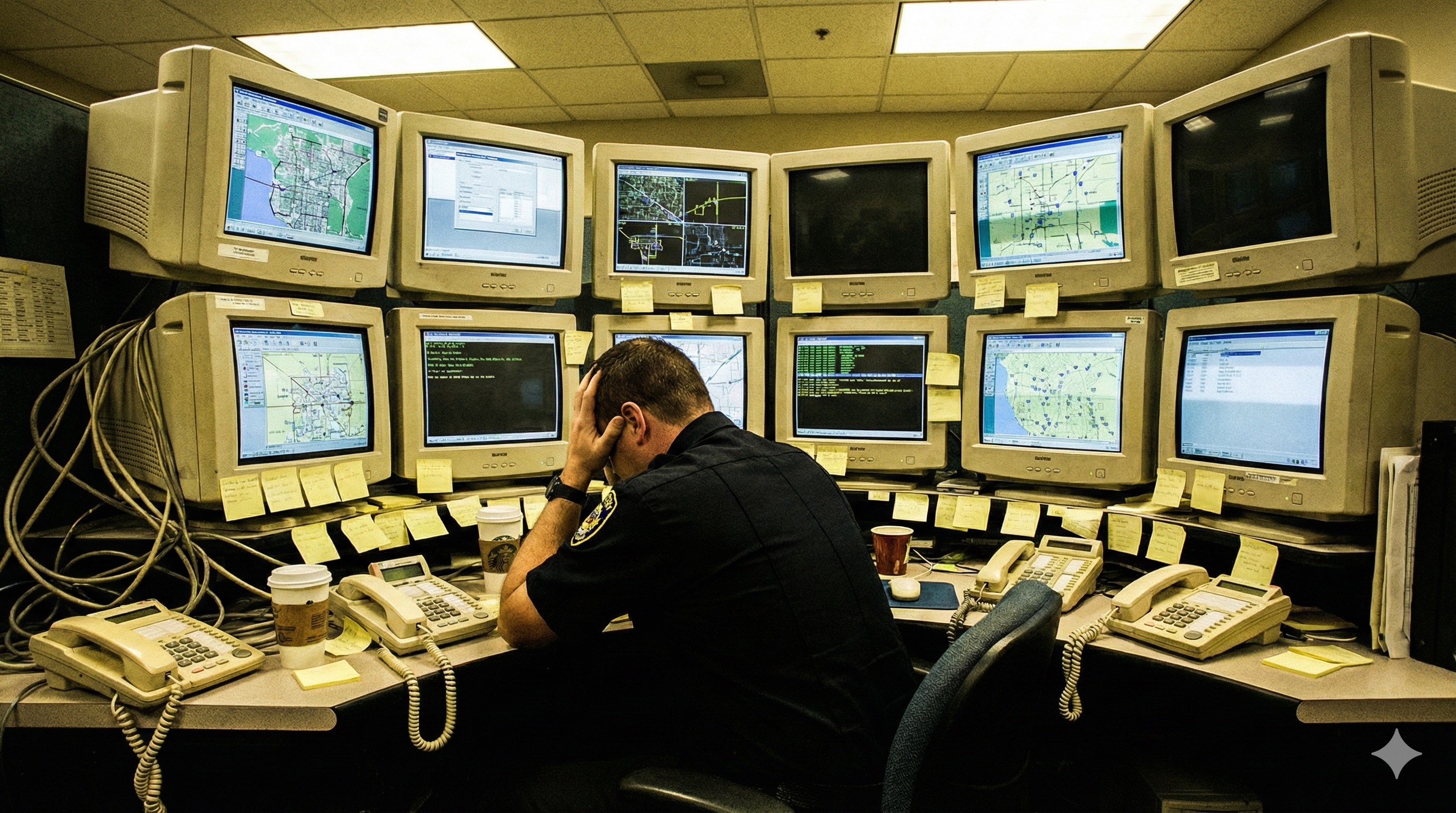
A dispatcher with his head in his hands behind a wall of mismatched legacy monitors and sticky notes
Use cases · Drawn from the public record

What the record
already shows.

Six documented emergencies, reconstructed from public records, official investigations and contemporaneous reporting. Each one exposes a different way the systems behind 911 fail — and what an operational system of record is built to do instead.

About these cases.  The following incidents are drawn from public records, official investigations and contemporaneous news reporting. Their outcomes are historical fact. Descriptions of REACT describe how the platform is designed to operate — not a claim that REACT was present at, or would have changed the outcome of, any individual incident. They are presented to illustrate the capability gaps these emergencies revealed.

Six emergencies, six lessons

A different failure in every one.

No single feature would have answered all six. Together they describe the requirements for a modern operational platform.

Lesson 01

Calls were never fused

Five reports of one kidnapping were treated as five unrelated incidents.

Denise Amber Lee · 2008
Lesson 02

Location existed, unseen

A trapped teen’s GPS was in the system but never surfaced for responders.

Kyle Plush · 2018
Lesson 03

Location without context

Exact coordinates, but nothing scored “lost + no water + 100°F” as imminent.

Canyonlands NP · 2024
Lesson 04

Voice alone wasn’t enough

One-tap video let a dispatcher see an infant’s airway and guide a save.

Sullivan County, TN · 2024
Lesson 05

The victim couldn’t speak

A silent call plus live address history revealed an active DV emergency.

Ridgecrest, CA
Lesson 06

Precise location at scale

Browser GPS turned 450-square-mile maritime searches into targeted rescues.

U.S. Coast Guard i911
When the system failed people

Three that should not have ended this way.

Case 01Incident fusion · MappingOutcome · Victim murdered

The Denise Amber Lee kidnapping

North Port, FL · January 17, 2008

Over several hours, five separate 911 calls came in about the same abduction. The victim herself reported a green Camaro; witnesses gave the license plate and direction of travel. The calls were never synthesized into a single incident, a key witness call was misrouted, and officers in the field never received the complete picture. Denise Amber Lee was found murdered the next day.

Where the system failed

  • Five calls about one kidnapping were handled as separate, unrelated incidents.
  • A witness call carrying the license plate was misrouted.
  • Partial location clues were never combined into a search corridor.
  • Field officers never received complete incident intelligence.
How REACT is designed to respond

Correlate calls that describe the same event into one operational thread, feed partial location data into a continuously updated map of probable search areas, and put the same complete intelligence in front of every responder — across jurisdictions.

Case 02Location made actionable · Multi-modalOutcome · Teen died trapped

The Kyle Plush tragedy

Cincinnati, OH · April 10, 2018

A 16-year-old, pinned by a folding seat in his minivan, used Siri to call 911 twice — describing a gold Honda Odyssey in his school lot and saying he could not breathe. His GPS coordinates were never clearly surfaced for navigation; officers drove the lot but never found the vehicle. He died of asphyxiation roughly six hours after his first call.

Where the system failed

  • GPS coordinates existed but were never clearly displayed for navigation.
  • No micro-location guidance to a specific parking area.
  • No workflow flagged “trapped” and “can’t breathe” for persistent follow-up.
  • No link to school cameras or a systematic search of the lot.
How REACT is designed to respond

Put caller GPS, the property map, available camera feeds and responder positions on one screen, route officers to a precise point, and automatically flag life-threatening language — holding an incident active and critical until it is confirmed resolved.

Case 03Risk intelligence · Environmental AIOutcome · Two lives lost

The hikers who texted 911 before dying

Canyonlands National Park, UT · July 2024

During an extreme heat wave, a father and daughter texted 911 that they were lost and out of water, including GPS coordinates. Dispatch launched search-and-rescue but treated it as a routine lost-hiker call rather than an imminent threat to life. Heat above 100°F, dehydration and terrain proved fatal before rescuers reached them.

Where the system failed

  • No risk scoring of “lost + out of water + extreme heat.”
  • Live weather and heat-index data were not fused into the incident.
  • No survivability estimate of time-to-collapse.
  • Terrain difficulty and resource-mode decisions were not accelerated.
How REACT is designed to respond

Fuse victim condition, live weather and terrain into a single risk score — so a text reading “lost, out of water” during a heat advisory is computed as survival measured in hours, escalated immediately, with SAR resource recommendations generated automatically.
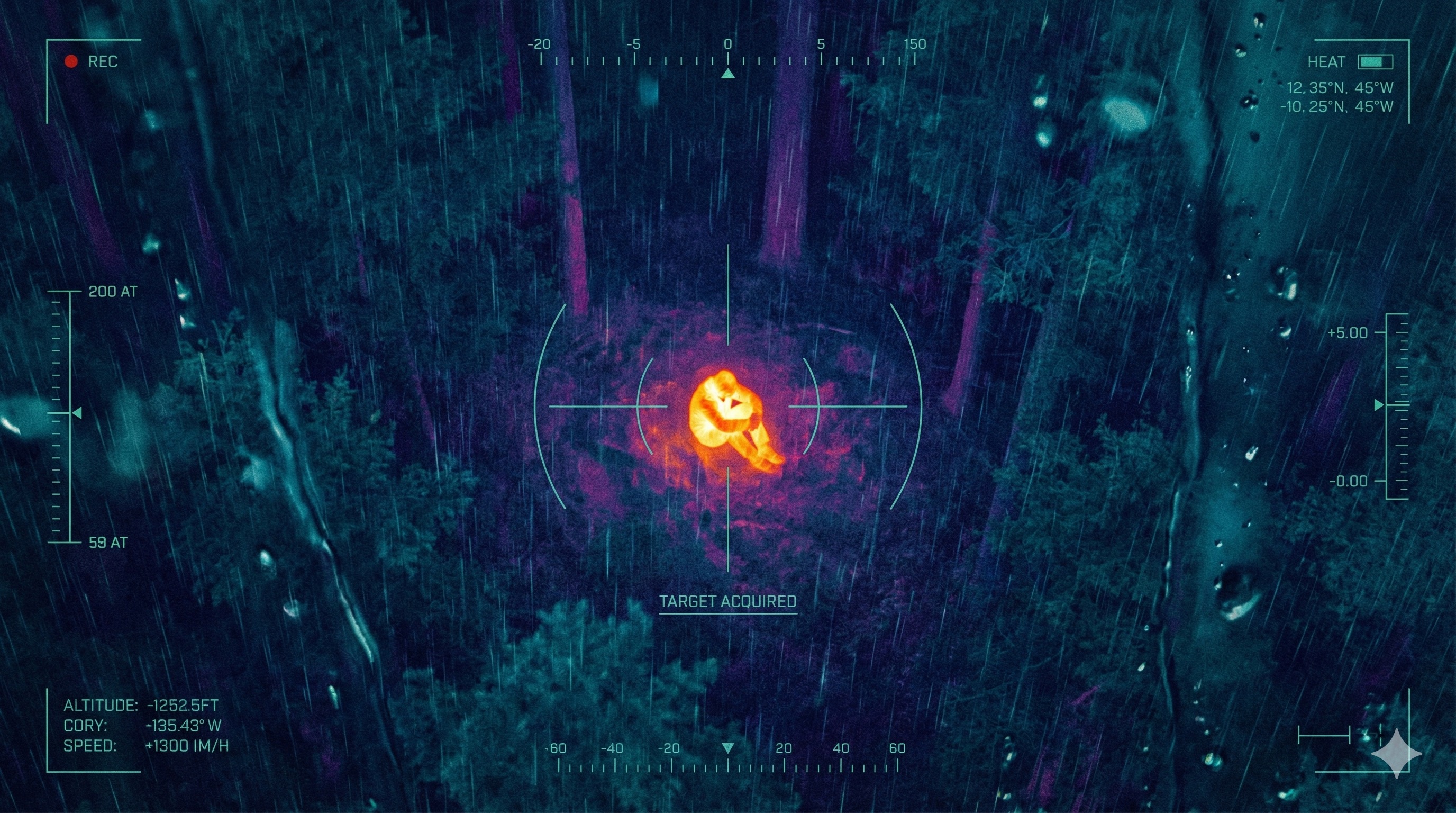
A thermal drone view locates a lost person in dense, rainy woods, framed by a targeting reticle reading TARGET ACQUIRED
The difference a whole picture makes

When the location is exact and the picture is shared, a search becomes a rescue.

When the picture was whole

Three saves that show what works.

The same capabilities, present at the right moment, change the ending.

Case 04Multi-modal · One-tap videoOutcome · Infant saved

The Sullivan County infant CPR save

Sullivan County, TN · December 19, 2024

A panicked father reported his unresponsive seven-month-old after a bathtub submersion. Panic and multiple voices made an audio-only assessment nearly impossible. The dispatcher opened a one-tap video link, saw fluid in the airway, and guided the father to clear it with a bulb syringe. The infant was breathing before EMS arrived and fully recovered.

What audio alone could not do

  • Voice-only assessment was overwhelmed by panic and noise.
  • No way to verify CPR technique visually.
  • The dispatcher could not see the airway or the patient’s condition.
  • Arriving EMS had no visual preview of the scene.
The REACT capability it proves

Escalate from voice to one-tap video — no app to install — for visual assessment and guided care, share that feed with responding EMS, and record every interaction for QA and liability protection.

Case 05Silent communication · Live historyOutcome · Victim safe

The domestic-violence call that never completed

Ridgecrest, CA

A 911 call from a residence never completed — the caller could not speak. A location ping, combined with prior call history at the address showing past domestic-violence incidents, formed a pattern pointing to an active DV situation with a victim who couldn’t talk. Officers were dispatched, arrested the suspect on scene, and protected the victim.

Where legacy systems fall short

  • Dropped and silent calls are often dismissed as misdials.
  • Prior-incident history sits siloed in a separate records system.
  • No correlation of a dropped call with a domestic-violence history.
  • Victims who can’t speak have no safe alternative channel.
The REACT capability it proves

Treat every contact — dropped, silent or a bare location ping — as a possible emergency; surface address history and risk flags instantly; offer no-speak options like tap responses and silent alerts; and brief officers with prior incidents and protective orders before they arrive.

Case 06Precise location at scale · Federal proofOutcome · 534 saved

The U.S. Coast Guard i911 program

USCG District 14 · Maritime · 2019–2022

534
Lives saved
1,300
Lives assisted
30 sec
GPS update rate

The U.S. Coast Guard deployed i911 — a web link texted to a distressed mariner that, once tapped, returns precise device GPS updating every 30 seconds. Against cell-tower errors of 15+ miles over open water, it turned needle-in-a-haystack searches — a boater “somewhere in the 450-square-mile Albemarle Sound” — into targeted rescues.

What the program validated

  • Browser-based GPS works reliably at scale, across thousands of emergencies.
  • People can activate a simple text link under extreme stress.
  • 30-second updates reveal drift from wind and current.
  • A federal agency’s adoption provides institutional proof.
How REACT extends it

REACT extends this proven model to land — one-tap GPS links from any PSAP, continuous breadcrumbs for moving incidents, cross-jurisdictional sharing, and a terrain, traffic and indoor-awareness layer — across medical, fire, law enforcement and SAR, for public safety, federal and enterprise operations.

What every case points to

Five capabilities, one platform.

Read together, the cases describe a single system of record — not five separate tools.

01

Single operational picture

Calls, texts, video, telematics, responder status, history and environment synthesized into one interface — for telecommunicators, field responders, command and partner agencies.

02

AI intelligence layer

Incident fusion, real-time risk scoring, resource optimization, pattern recognition and natural-language extraction of the details that matter.

03

Multi-modal communication

Voice with transcription, one-tap video, two-way text, browser GPS and silent alerts — chosen to fit the incident and the victim’s capabilities.

04

Cross-jurisdictional coordination

One shared picture across agencies, with boundary detection, role-based access, mutual-aid activation and interagency comms — no manual radio patches.

05

After-action intelligence

Automated timelines, performance analytics, training material, complete liability documentation and pattern analysis that improves protocols.

Go deeper

The full white paper

Ten verified cases and the platform requirements they define — available to qualified agencies, partners and investors.

Request the white paper →
Common questions

About these use cases.

Are these real cases?

Yes. Each incident is drawn from public records, official investigations and contemporaneous news reporting. The outcomes described are historical fact.

Is REACT claiming it would have changed these outcomes?

No. REACT was not present at these incidents, and we make no claim about what would have happened in any individual case. The descriptions of REACT reflect how the platform is designed to operate, and are presented to illustrate the capability gaps these emergencies revealed.

Why these six cases?

Each one isolates a different failure mode of legacy 911 — incident fusion, surfacing location, risk intelligence, multi-modal communication, silent-victim communication, and precise location at scale — and together they span public safety, search-and-rescue, medical, law enforcement and federal maritime missions.

What REACT capabilities do these cases demonstrate?

A single operational picture, an AI intelligence layer (incident fusion and real-time risk scoring), multi-modal communication including one-tap video and browser GPS, cross-jurisdictional coordination, and after-action intelligence.

How do I get the full Use Case White Paper?

The complete white paper covers ten verified cases and the platform requirements they define. It is available to qualified agencies, partners and investors on request — request a briefing and we will share it.

Engage

See REACT run a live incident.

Request a briefing for your agency, security operation, or fund. We’ll show the working platform — not a slide.