The operational
system of record.
REACT replaces the stack rather than layering on top of it — fusing the data, supporting the decision, running the workflow, and recording every action as the Next Generation 911 Foundational System of Record for Emergency Communications across PSAP, GSOC, and Federal Response to form a complete Emergency Communications 911 ecosystem.
Every feed, one picture
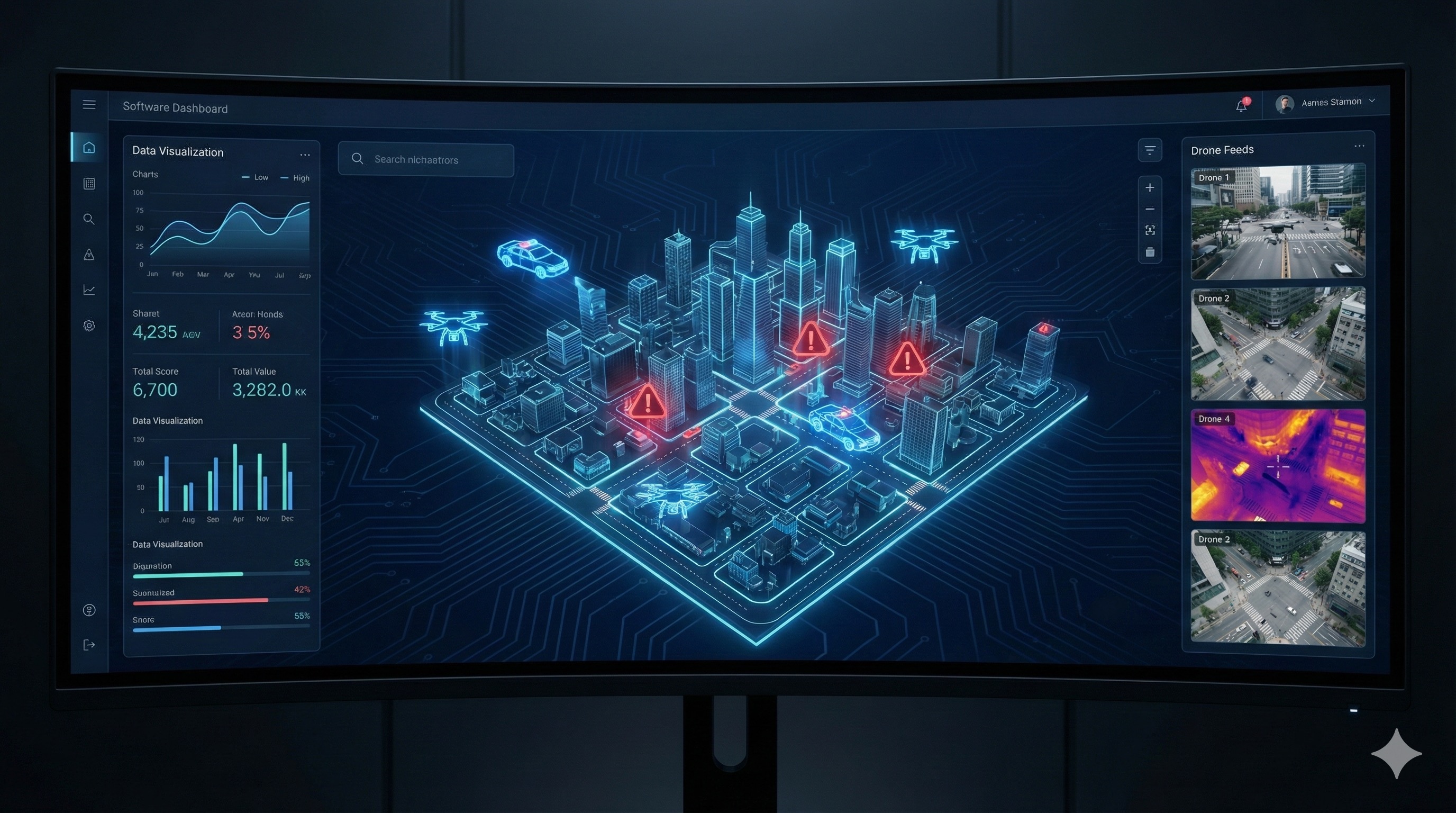
50+ source types — computer-aided dispatch, video management, radio, IoT sensors, drones and citizen multimedia — resolve into a single live operational view, correlated automatically instead of by hand under stress.
Intelligence at the core
The platform produces live incident summaries, surfaces what’s changed, recommends units and actions, and translates across 44 languages in real time — all embedded in the operator’s flow.
Workflow that holds
A disciplined two-track workflow keeps the right people doing the right thing at the right phase of an incident — turning improvised coordination into a repeatable operational rhythm.
Recorded and accountable
Every decision, message and hand-off is captured in a complete, time-stamped audit trail — ready for after-action review, oversight, and the record-keeping mission-critical work requires.
The Operator Console.
Not a mockup. This is REACT handling a live call — transcription, caller location, incident timeline, AI-recommended dispatch and a full audit trail, on one screen.
One incident. Many inputs.
Every signal from the field — the call, the text, the live video, the drone, the sensor, the dispatch record — resolves into a single correlated incident, automatically.
911 calls
Voice intake with live transcription and caller location.
Text & SMS
Inbound messages and to-911 texts, triaged in the same queue.
Live video
Citizen, CCTV and body-worn streams attached to the incident.
Drone feeds
Aerial views joined to the operational picture in real time.
IoT sensors
Gunshot, alarm, environmental and field-sensor signals.
CAD / RMS
Dispatch and records data fused, not re-keyed.
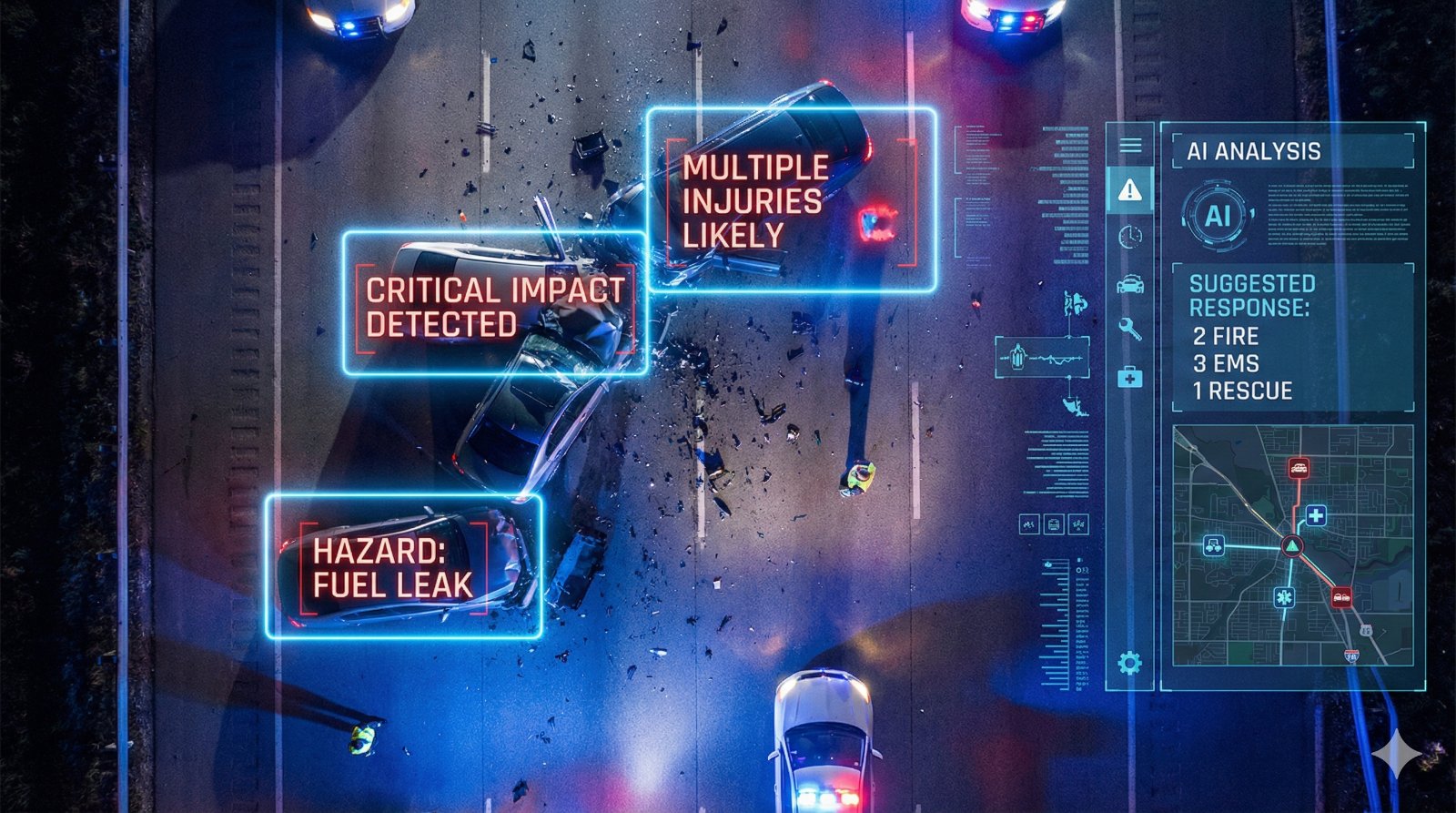
The platform reads the scene.
REACT turns raw feeds into ranked hazards and a recommended response — so the operator sees the decision, not just the data.
Two tracks. One discipline.
REACT wasn’t built by bolting AI onto a decades-old CAD workflow. It’s built around a proprietary Two-Track Workflow Architecture that separates how information is processed from how an incident is commanded — and keeps the two in sync in real time.
How information is processed
Every feed resolves into one live, correlated operational picture — so the operator sees a single integrated view that updates in real time, not fifteen partial screens.
How the incident is commanded
A structured command discipline keeps the right people on the right action at the right moment — turning improvised coordination into a repeatable operational rhythm.

An advantage that doesn’t ship in an update.
Because the edge is architectural rather than a single feature, it can’t be matched with a point release. For legacy platforms, closing the gap is a multi-year undertaking.
- Architectural — not a bolt-on feature.
- Requires equivalent operational-data access.
Engineered for the agencies that can’t fail.
- Cloud-native, microservices architecture with a 99.99% uptime target.
- Standards-aligned to the NG911 i3 framework agencies procure against.
- Operator wellbeing built in: graphic content is filtered before it reaches a dispatcher, converting visual trauma into text intelligence while preserving situational awareness and operator choice.
- A 24–36 month replication barrier — competitors can’t match it without equivalent operational-data access.
Platform questions.
What is the REACT platform?
REACT is a cloud-native operational system of record that fuses data, supports decisions, runs the workflow, and records every action across mission-critical environments. Instead of bolting AI onto a legacy CAD workflow, it replaces the fragmented stack with one platform serving public safety, enterprise security operations, and federal & defense.
What data sources can REACT fuse?
50+ source types resolve into one correlated incident automatically — including 911 voice calls, text and SMS, live citizen/CCTV/body-worn video, drone feeds, IoT and gunshot/alarm sensors, radio, and CAD/RMS records. Data is fused, not re-keyed.
What is the Two-Track Workflow Architecture?
It’s REACT’s proprietary design that separates how information is processed (the data workflow) from how an incident is commanded (the incident workflow), keeping the two in sync in real time.
The principle is “AI commands information, humans command actions”: the system intakes, analyzes and prioritizes feeds, the operator decides, and every recommendation and step lands in a complete audit trail. Because the edge is architectural rather than a single feature, legacy platforms face a 24–36 month replication barrier.
Does REACT replace CAD/RMS or integrate with it?
REACT replaces the fragmented stack and becomes the operational system of record, but it ingests and fuses data from existing CAD/RMS so agencies aren’t forced into a day-one rip-and-replace. Typical deployment is 3–6 months versus 18–36 for a legacy swap.
What is REACT’s security and deployment posture?
REACT runs on AWS GovCloud (US) from day one, with a FedRAMP Moderate and DoD IL4 pathway, CJIS alignment, and edge-capable, air-gap-ready options. It’s a cloud-native, microservices architecture targeting 99.99% uptime and standards-aligned to NG911 i3.
See REACT run a live incident.
Request a briefing for your agency, security operation, or fund. We’ll show the working platform — not a slide.